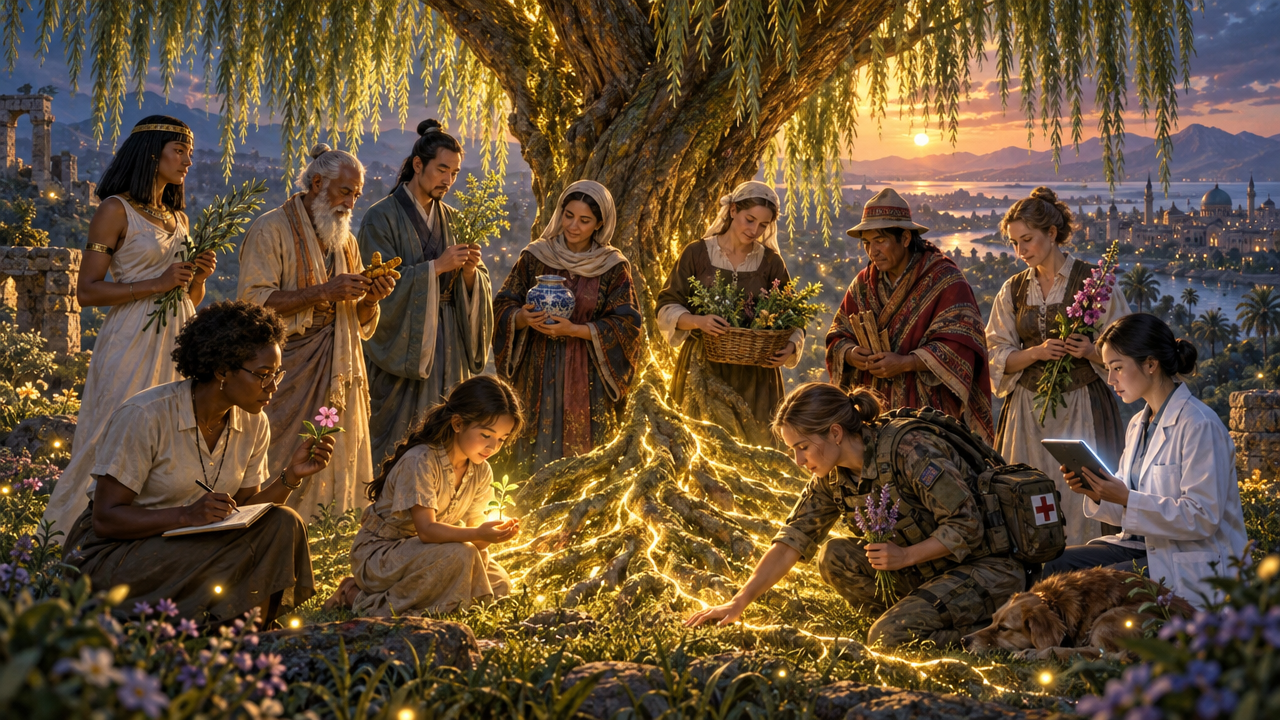
Eleven healers from across five thousand years stand together around a glowing willow at dusk, its roots lit with a golden-green light.

Nutraceutical Assisted Programs

Every healer pulled the same thread.

5,000 years of healing. One thread. NAP grades it.

Plain answers from the graded evidence. Educational, not medical advice.

Follow the thread

Start where you are.

A system of medicine serves many people at once. Choose your way in, or keep scrolling for the story of where it all came from.

Five thousand years. One thread.

They lived centuries apart and never met. Every one of them did the same four things: watched the body, knew the land, learned the plants, and passed on what worked.

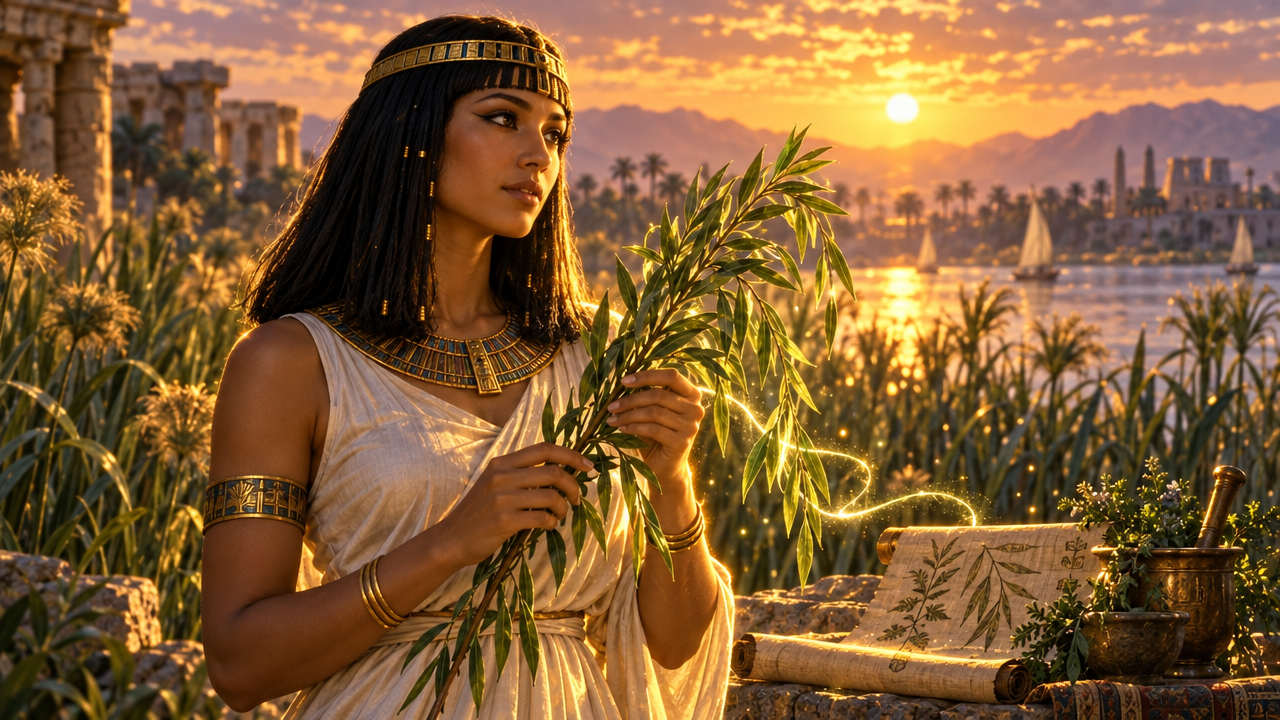
Neferet, herbalist-physician, Nile valley

c. 1550 BCE

Nile valley

Neferet

Herbalist-physician

Egyptian medical papyri from around 1550 BCE already list willow among their ingredients. Thousands of years later, chemists studying willow bark isolated salicin, and that line of work led to aspirin, first made at Bayer in 1897.

Carries: willow branch
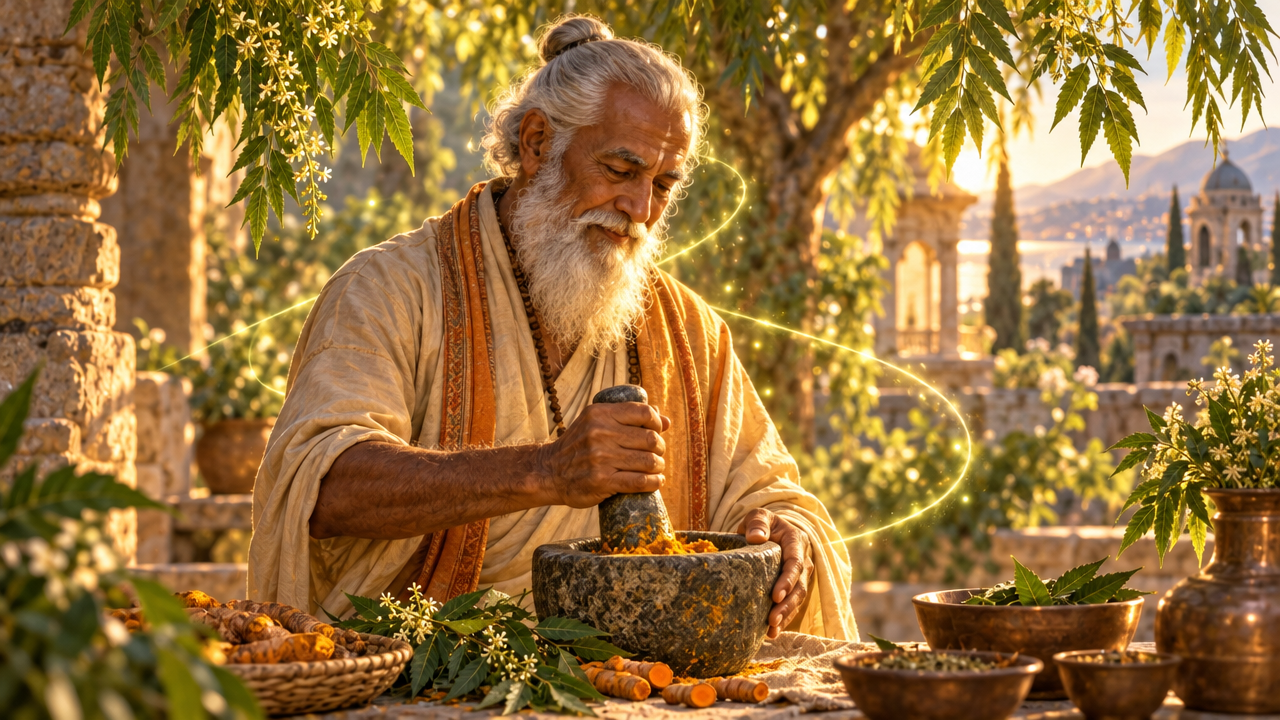
Ishaan, vaidya, an ayurvedic physician, Northern India

c. 100 BCE

Northern India

Ishaan

Vaidya, an Ayurvedic physician

Classical Ayurvedic texts, compiled over centuries around 2,000 years ago, used turmeric as part of caring for the whole person. Today it is one of the most-studied plants on Earth, with thousands of research papers; some human trials are encouraging, and scientists are still working out how strong the evidence is.

Carries: turmeric root

340 CE

Jin dynasty China

Ge Lan

Herbalist-scholar

A 4th-century Chinese handbook said to soak sweet wormwood in water and wring out the juice, with no boiling. In the 1970s the scientist Tu Youyou read that line, tried a low-heat extraction, and found artemisinin, work that earned her the 2015 Nobel Prize.

Carries: sweet wormwood

c. 950 CE

Baghdad

Nasira

Physician-pharmacist

In the hospitals of Baghdad and Persia, physicians such as al-Razi and Ibn Sina wrote great medical encyclopedias. They also set out rules for testing a remedy: try it on a simple illness, compare, and trust only a result that repeats.

Carries: pharmacy jar and pressed herbs

c. 1150

Rhineland

Sister Agnes

Abbey herbalist

In medieval Europe, monasteries grew healing herbs in their gardens and copied the old herbal books by hand. In the Rhineland in the 1150s, the abbess Hildegard of Bingen wrote down hundreds of plants and their uses. (Sister Agnes is fictional, not Hildegard.)

Carries: garden basket of herbs

1630s

Andean cloud forest

Killari

Andean healer

In the 1600s, bark from the “fever tree” of the Andean forests reached Europe. Historians still debate how much Andean healers knew first. In 1820 two French chemists isolated quinine from that bark, and it became a medicine the whole world depended on.

Carries: cinchona bark

1775

English Midlands

Molly

Cottage herbalist

In 1775 the physician William Withering was shown a family recipe for dropsy, kept secret by an old woman in Shropshire. He tested foxglove, its key herb, patient by patient for ten years, and his careful notes led to digitalis heart medicines. (The plant itself is poisonous; the medicine came from the testing.)

Carries: foxglove

1950s

The field and the lab

Dr. Ama Osei

Field botanist and researcher

In the 1950s, Canadian researchers tested a Jamaican folk tea made from Madagascar periwinkle that was used for diabetes. It didn't lower blood sugar, but the testing revealed something no one expected: compounds that became the cancer drugs vinblastine and vincristine.

Carries: madagascar periwinkle

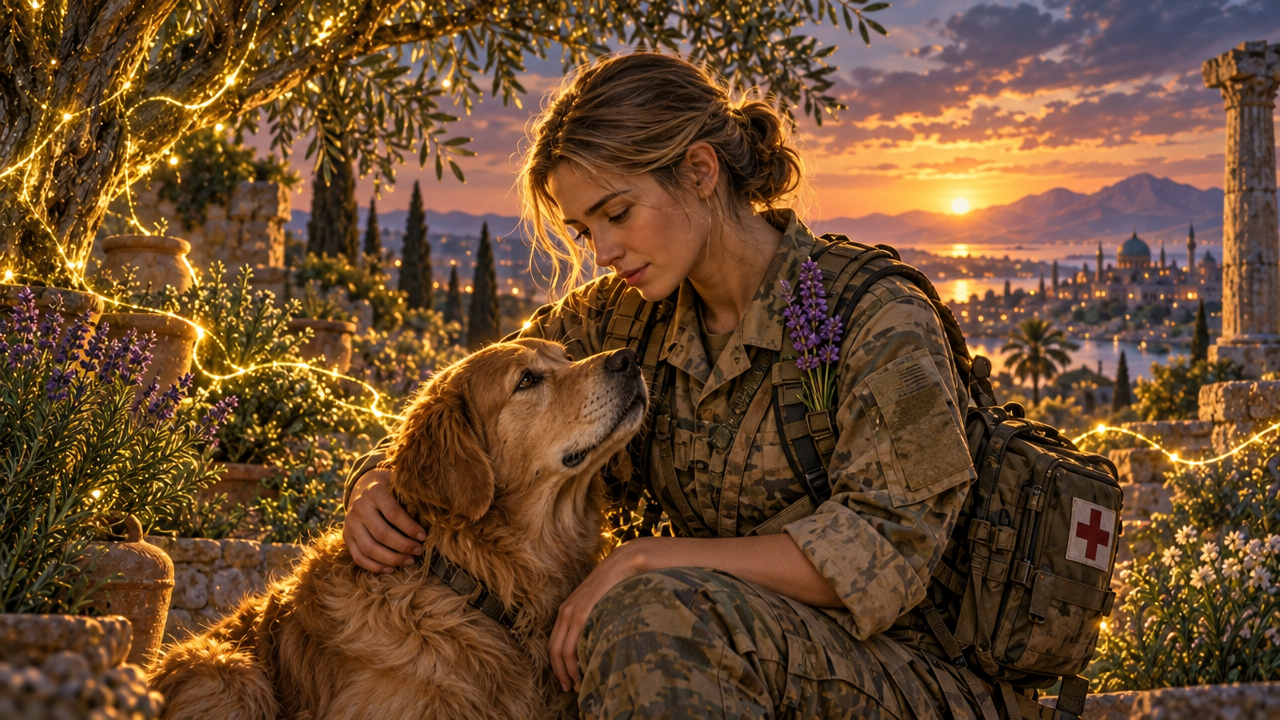
“Doc” Reyes, combat medic, later a veteran, Home from deployment

Modern day

Home from deployment

“Doc” Reyes

Combat medic, later a veteran

The veteran thread: the healer who also needs healing. NAP's first population is veterans and their families.

Carries: medic bag, with a sprig of lavender in the strap

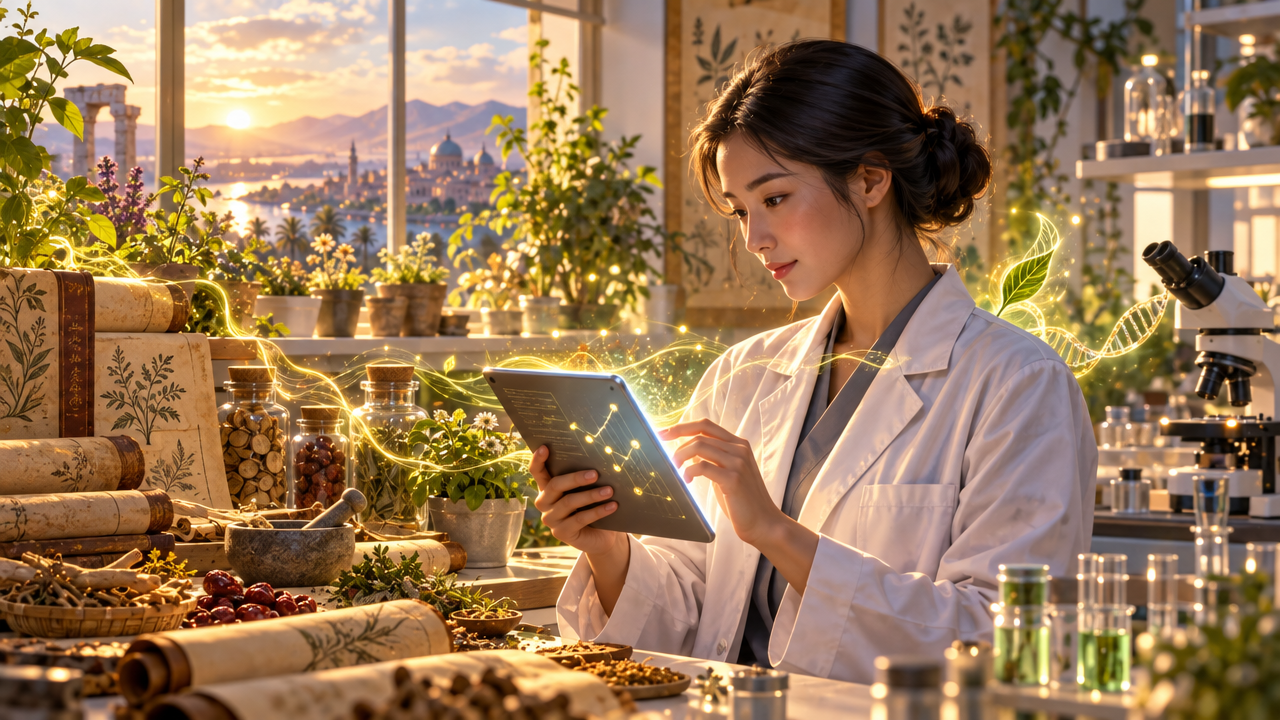
Dr. Lena Park, clinician-scientist, A clinic, today

2026

A clinic, today

Dr. Lena Park

Clinician-scientist

The newest hand on the thread. She doesn't throw the old knowledge away. She grades it.

Carries: a tablet showing an evidence grade

2050

Everywhere

Kai

A child of the future

The reason for all of it. The next generation inherits the thread.

Carries: a seedling

The thread reaches today. It reaches you.

Meet the Circle.

Eleven healers, five thousand years apart, standing in one circle. Nobody leads it, and no tradition ranks above another. Open any portrait to hear their story.

The healers of the Circle are fictional composites, painted with AI and inspired by real traditions and eras. The plant histories they carry are real and sourced. Traditional use is honored here as history, never offered as evidence.

Every healer passed on what they believed worked.

NAP adds one thing: we grade it.

Willow, sweet wormwood and foxglove led to modern medicines only after someone isolated and tested what was in them. Most remedies were never tested that way. So every link in the NAP database carries an honest grade for how strongly research supports it, and where the answer is “we don't know,” it says so.

The evidence garden

184 ingredient–condition links, graded so far. Taller plants mean stronger evidence. The number is how many links landed in each grade.

4EstablishedThe strongest support
87StudiedResearch exists, not settled
59EmergingEarly research only
31MinimalVery little research
3NoneNo support found

Graded in-house, not yet independently reviewed by a clinician, pharmacist, or attorney. A grade describes research, not a promise that anything will work for you.

The Library.

Twelve founding documents hold the whole framework. Every one is here in full, and every one can be read aloud to you. Open any volume.

  • Core framework
  • Governance & build
  • Clinical application
  • Integrity & proof

The whole framework on one pageBrowse the shelves by themeGlossary

The Circle today.

This story is still being written, and we'd rather tell you exactly where it stands. NAP certifies no one and sells nothing.

Rooted today

  • Twelve founding documents, published as drafts and narrated
  • 184 ingredient–condition links graded for strength of evidence (graded in-house)
  • An AI guide that answers from the graded evidence and routes any crisis to 988 or 911
  • A drafted pilot protocol for veterans, using standard validated questionnaires

Still seeds

  • Outcome data of its own. No one has been enrolled
  • Independent review of the grades by a clinician, pharmacist, or attorney
  • A registered pilot study
  • A seated Standards Council. It has no members
  • Any clinic or practitioner that has adopted NAP

NAP is designed to work alongside the VA's Whole Health approach. The VA has not reviewed or endorsed NAP. Read the full status